Gun control: If the Second Amendment falls, our entire Bill of Rights falls.


For 227 years, the amendment has guaranteed that “the right of the People to keep and bear arms, shall not be infringed.” We should not abandon it.
The first 10 amendments to the Constitution make up the Bill of Rights. These amendments are the foundation of our liberty and the lasting legacy of the Founding Fathers who so wisely created a Constitution designed to protect the freedom of generations far into the future. These rights are a major factor in what makes America an exceptional nation and a beacon for freedom that attracts people from the world over.
Once we begin whittling away at one of our rights in the Bill of Rights, what’s to stop the erosion of the others? Freedom of speech? Freedom of religion? Changes like this wouldn’t be minor tinkering – they would amount to major disfigurement of America’s foundational document, equivalent to amputating a person’s arm or leg.
Gun control is a term used by liberals when advocating unconstitutional[1] laws designed to disarm[2] people by restricting the lawful purchase, ownership, or carrying of guns, under the guise of "public safety." Studies show that increasing lawful access to guns results in less crime,[3] but, despite the fact that gun ownership is a Constitutional right, Leftists push gun control because it increases the dependency of voters on government for protection while disarming citizens from any self-defense against violent crime or tyranny such as genocide. Supporters of gun control need only to look at leftist dictatorships such as Venezuela.[4][5]
The political effect of gun control is to shift voters leftward, and hence gun control is pushed hard by the liberal media and leftist politicians.[6] In the United Kingdom, which already has the strictest gun control in Europe, leftists demand control over 120,000 deactivated guns, although their activation and use constitute only 0.04% of all gun offenses there. But leftists want gun control because fewer guns means greater dependency on government.[7] Gun control can be considered a form of doublespeak.
In a stunning blow to the gun control effort just after Independence Day 2018, the case Defense Distributed v. U.S. Department of State resulted in a settlement[8] and an admission on part of the Department of Justice that stated:
"Non-automatic firearms up to .50-caliber – including modern semi-auto sporting rifles such as the popular AR-15 and similar firearms – are not inherently military."[9]
In many other countries, gun ownership is not a constitutional right as in the U.S., so gun control may be more oppresssive.
Background
Gun control is a denial or limitation by governments of the right to armed self-defense. "In contrast to most other weaponry, firearms are preeminently defensive in effect."[10] as promised by the Second Amendment of the Constitution of the United States of America. Genocide has occurred only after gun control first disarmed the citizenry.[10]
Proponents use the discredited – but superficially appealing – claim that fewer lawfully-owned guns lead to less crime, although guns are primarily defensive weapons[11][12] (see Concealed carry).
Gun control laws cause enormous hardships. In May 2012, a gun control law resulted in a 20-year prison sentence against an African American woman for merely firing warning shots against her husband, and there was widespread outrage in Florida against this unconscionable sentence.[13]
On the federal level of the United States, the three primary federal gun control laws are:
- National Firearms Act (1934)
- Gun Control Act (1968)
- Brady Bill (1993)
These laws have further been amended by other laws such as the Firearms Owners Protection Act (1986) and the Omnibus Crime Bill (1994). Seeking a loophole in the federal gun laws, in 2009 Montana passed a law "making guns that are made and kept within state boundaries exempt from federal regulations" including "background checks, licensing and registration."[14] However, the US Court of Appeals for the Ninth Circuit held that all gun sales affect interstate commerce to the point that federal regulation attaches to guns even if the gun owners and manufacturer promise to keep that make of gun within a single state.[15]
Most gun control laws are found on the state level, particularly in liberal-leaning states.[16]
Weapon forfeiture
One of the main stated goals of gun control is to prevent criminals from using weapons to commit crimes. So, in addition to laws regulating the sale and possession of weapons, some laws specify forfeiture if a weapon was used during the course of committing a crime. For example, Virginia Code § 19.2-386.29 provides:
All pistols, shotguns, rifles, dirks, bowie knives, switchblade knives, ballistic knives, razors, slingshots, brass or metal knucks, blackjacks, stun weapons, and other weapons used by any person in the commission of a criminal offense, shall, upon conviction of such person, be forfeited to the Commonwealth by order of the court trying the case.
There are also federal laws specifying the forfeiture of weapons used during a crime.[17]
So, to the extent that opponents of gun control laws claim that the government is trying to "take away" guns, such provisions are the focus of their concerns.
The fallacy and motivation for gun control

Gun control potentially causes an increase in crime by restricting its main deterrent: self-defense. A study by Professor Gary Kleck, initially a liberal critic of gun control, caused him to change his mind on this issue when the evidence showed that crime was predominantly prevented when people could carry guns. See Point Blank: Guns and Violence in America.[18] In the United States, law-abiding uses of guns outnumber criminal uses by about a factor of 1000 to 1,[19] and the removal of guns from everyone eliminates the lawful use of self-defense and its deterrent effect. "Americans use firearms to defend themselves from criminals at least 764,000 times a year."[20] Specific examples of guns being used successfully in self-defense are easy to find.[21][22] "In 1982, a survey of imprisoned criminals found that 34% of them had been "scared off, shot at, wounded or captured by an armed victim."[20] When Florida began allowing its citizens to carry a concealed weapon, Florida's firearm homicide rate fell by 37% while the national average increased by 15%.[20] As explained below, the political effect of gun control is to cause voters to become more dependent emotionally on government and more supportive of bigger government.
Actual gun-related crime deaths in the United States are far out of proportion to the 300 million firearms owned by its populace.
There are about 30,000 gun-related deaths per year out of a population of 328 million, but a recent breakdown shows that even these low amounts have little to do with violent criminality. 23,000 of them are suicides, which can't be prevented by gun laws. 1,000 of them are caused by police in the line of duty, so are not connected to gun-control laws. 500 are accidental deaths, so are also non-criminal, leaving mostly criminal 5,500 gun-related deaths.
Of these 5,500, a large share of these occur in large cities, the greatness of which suggest them to be the effect of municipal mismanagement rather than an excess of firearms. For example, strict gun controls in London on the other side of the Atlantic caused a mushrooming of knife crime.
America's large cities' tendencies to violence, the deaths of which would not be expected to change, regardless of weapons of choice, can be subtracted as follows: 298 in St. Louis, 327 in Detroit, 328 in Baltimore, 764 in Chicago. These four chronically-mismanaged cities alone account for a full 30% of all statistically-reduced 5,500 criminal gun deaths, leaving 3,900 criminal gun-related causes-of-death for everywhere else in America.
Risk-comparison studies show these numbers of deaths in the United States to be small both when compared with other causes of death and when compared with the proportion of media coverage they receive.
For example 70,000+ die each year of drug overdoses, 49,000 die each year of the flu, 37,000 die of traffic fatalities, 250,000 die of preventable medical errors and 610,000 die of heart disease.
Studies by John Lott and others also indicate that gun control causes higher crime rates.[23] Washington, D.C. has one of the highest crime rates in America even though it completely bans private handguns.[24] "Switzerland, Israel, Denmark and Finland, all of whom have a higher gun ownership rate than America, all have lower crime rates than America, in fact, their crime rates are among the lowest in the Western World."[25] Lott demonstrates that in Britain, Australia and Canada, increased gun control in the late 1990s led to increased crime, the exact opposite of what the proponents of the gun control promised.[26] States in the U.S. that have enacted concealed-carry laws enjoy lower crime rates.[27]


In Australia, where gun ownership was less widespread and the gun control measures were less strict, there was an immediate increase in robbery and armed robbery after the gun control went into effect in 1996 (see chart at right).[28]
There is no clear evidence supporting a decrease in crime from gun control.[29][30] Although from 1979 to 1996, 11,110 Australians died by gunshot representing an annual average of 617. In the seven years after new gun laws were announced (1997 to 2003), the yearly average almost halved, to 331. In the decade up to and including Port Arthur There have been 11 mass shootings where 100 people were shot dead and another 52 wounded, while in In the 10 years since 1996 and the new gun laws, not one mass shooting (more than five victims) has occurred in Australia (although in 2002 a gunman killed two and wounded four at Monash University) [31]
Subsequent to gun control in England:[32]

- "from 1997 to 2001, the rate of violent crime more than doubled. Your chances of being mugged in London are now [as of 2002] six times greater than in New York. England's rates of assault, robbery, and burglary are far higher than America's, and 53 percent of English burglaries occur while occupants are at home, compared with 13 percent in the U.S., where burglars admit to fearing armed homeowners more than the police. In a United Nations study of crime in 18 developed nations published in July, England and Wales led the Western world's crime league, with nearly 55 crimes per 100 people."[33]
Gun control in Britain and Australia has been followed by a predictable shift to the left politically by voters as they lost their instrument of self-defense and became more emotionally dependent on government. Contrast that with the United States, where an effort to push gun control after the Columbine massacre failed in 2000 and the government has remained as conservative—if not more so—ever since.
The emasculation of the citizenry by gun control also arguably reduces the resistance of a society to intimidation, and exacerbates fear of consequences from causing offense. Subsequent to the passage of strict gun control in England some teachers have avoided teaching controversial subjects such as the Holocaust, the Arab-Israeli conflict and the Crusades during history classes.[34] Teaching Emotive and Controversial History 3-19 (p. 15) The anti-self-defense attitude of British authorities has also turned criminals into "victims" and victims who fight back into "criminals." One particularly egregious case involved a farmer being sentenced to life imprisonment for defending himself in his home after the home was repeatedly burglarized [35]
Trends
After decades of increasing gun control laws, the current trend in the United States is in the direction of more gun rights. The 1994 Omnibus Crime Bill included a ban on certain new rifles labeled assault rifles solely because of features of their appearance, and on new high-capacity magazines. This law recently expired and was not renewed by Congress. Also, Washington D.C.'s gun ban was struck down as unconstitutional by the U.S. Court of Appeals on March 9, 2007.[36][37]
By removing the deterrent effect of guns, gun control causes dramatic increases in crimes committed with other weapons:[38]
- You are now six times more likely to be mugged in London than New York. Why? Because as common law appreciated, not only does an armed individual have the ability to protect himself or herself but criminals are less likely to attack them. They help keep the peace. A study found American burglars fear armed home-owners more than the police. As a result burglaries are much rarer and only 13% occur when people are at home, in contrast to 53% in England.
Supporters of gun control argue that homicide with guns is much less in England than in the United States,[39] but that was true even before gun control and is likely due to cultural reasons. "A study comparing New York and London over 200 years found the New York homicide rate consistently five times the London rate, although for most of that period residents of both cities had unrestricted access to firearms. When guns were available in England they were seldom used in crime. A government study for 1890-1892 found an average of one handgun homicide a year in a population of 30 million."[38]
Gun control laws are often seen to conflict with the Second Amendment to the United States Constitution, which recognizes the right to bear arms. The Second Amendment reads: "A well regulated militia being necessary to the security of a free State, the right of the People to keep and bear arms shall not be infringed."
The "right to keep and bear arms" is a right guaranteed to the American citizen by the Bill of Rights through the virtue of a selective reading of said Bill. The phrase "a well regulated militia, being necessary to the security of a free state" precedes the statement, and most federal Courts of Appeals have held that this phrase requires that the "right to bear arms" relates to the collective rights of state militias, as opposed to the individual's rights to have any weapon desired. Just recently, the Court of Appeals for the DC Circuit went against nine other circuits in holding that the Second Amendment constitutes an individual right.[40][41] However, according to the judge writing for the majority in this case, its decision does still allow for "reasonable restrictions" on gun ownership and use, such as carrying of guns by intoxicated individuals, or in churches.
Only six cities in the United States ban handguns: Washington, D.C., Chicago, and four of its suburbs.[42] Some specific locations have also been labeled "gun-free zones," including schools, shopping malls, movie theaters, corporate offices, and more. In most cases, mass-shootings take place in these gun-free zones, since those who obey the rules do not carry, while those already planning to break the law disregard this rule. When attempted in areas where firearms are permitted, mass-shootings have often been quickly stopped by armed citizens.
Support for stricter gun control laws fell deeply between 1992 and 2012, and while it rose in the succeeding six years, support levels remained far lower than in 1992.[43]
Overview
"Gun control" can include:
- Restricting which persons can own firearms.
- Restrictions on the number of firearms a person may own, or purchase during a given time period
- Requirements that privately owned firearms be registered with the government.
- Bans on certain types of firearms; for example, "handguns" or assault rifles
- Restrictions on where firearms may be carried, for example into restaurants or post offices
- Requiring a "background check" and/or a "waiting period" to purchase a firearm
- Restricting when and where firearms may be bought and sold, for example banning their sale through the mail
- Requiring licenses or some other form of permission from the government to buy and/or sell a firearm
- Requiring some form of permission from the government to carry a firearm in public, either concealed or openly
- Laws granting special gun rights for some people, for example, retired law enforcement officers, which are denied the rest of the public, which was used in several southern states.
- Outright bans on carrying firearms in public
- Outright bans on private possession of firearms, though this has never occurred in the United States (with the exception of some municipalities, prior to those bans being struck down in court)
Arguments in favor
"The only purpose of a gun is to kill people."
The sixth commandment of the Ten Commandments in Exodus 20:13 in the Bible states, "You shall not murder."
Advocates point to the number of accidental deaths caused by children gaining access to improperly-stored guns. According to the Brady Campaign, a liberal organization that advocates for gun control, in the United States, " 1 out of 3 homes with kids have guns and nearly 1.7 million children live in a home with an unlocked, loaded gun."[44]
Another argument is that of suicide prevention. Guns are highly effective tools for committing suicide with a reported success rate of over 95%, whereas other common methods such as overdoses and cutting have a less than 10% success rate.
Arguments against
Ann Coulter wrote, "Numerous studies, including one by the National Institute of Justice, show that crime victims who resist a criminal with a gun are less likely to be injured than those who do not resist at all or who resist without a gun. That's true even when the assailant is armed."[45]
Emily Miller wrote, "New York City Mayor Michael R. Bloomberg has spent tens of millions of his billions trying to get his gun bans instituted in the rest of America, even though these laws have never stopped criminals from getting guns."[46]
Critics, such as Awr Hawkins of Breitbart.com, have argued that background checks, a form of gun control, have done nothing to prevent gun crimes.[47]
Hawkins has also pointed out that despite France having very strict gun control laws, the nation has had many Islamic terrorist attacks that used a variety of weapons, including guns and rifes.[48]
Since 1950, 97.8% of mass public shootings have occurred in gun-free zones.[49][50] On the other hand, a 2018 analysis of FBI data by Jacob Paulsen found that 94% of all mass shootings were thwarted by law-abiding armed citizens.[51] Additionally, the U.S. experiences a lower rate of mass shootings compared to the global average.[52] Student deaths by active-shooters are nine times more likely in gun-free zones.[53]
Constitutional debate
The Second Amendment reads:
"A well regulated militia being necessary to the security of a free State, the right of the People to keep and bear arms shall not be infringed."
Most constitutional scholars agree that since the amendment refers to "the right of the People" instead of the right of the militia, it protects an individual right to own guns. The reason for this was the fact that the supplying of guns for the military and militas was already provided for in Article I Section 8 as a power of Congress. The extent of that right was something hotly debated for decades, until the Supreme Court ruling of 26 June 2008, Heller v District of Columbia.
The majority opinion, written by Justice Antonin Scalia, held for the first time that the Constitution provides an individual right to bear arms, such as for self-defense, rather than a right that applies only to a state militia.
The decision upheld an appellate court ruling striking down Washington, D.C.'s 1976 handgun ban. The case marked the first time in more than 70 years that the Supreme Court had addressed the Second Amendment and the first time it spoke directly about the implication of an individual right. The court struck down two of the District of Columbia's gun control laws: its handgun ban and its requirement that other firearms kept at home have a trigger lock or be disassembled.
Relying on the broader historical record, Justice Scalia wrote:
| “ | putting all of these textual elements together, we find that they guarantee the individual right to possess and carry weapons in case of confrontation. | ” |
Scalia noted that the ruling should not be interpreted to "cast doubt on long-standing prohibitions on the possession of firearms by felons or the mentally ill, or laws forbidding the carrying of firearms in sensitive places such as schools and government buildings." [54]
Racism of gun control
In the United States of America, gun control has a strong racist origin and reasoning. Before the Civil War ended, State "Slave Codes" prohibited slaves from owning guns. After President Abraham Lincoln issued the Emancipation Proclamation in 1863, and after the Thirteenth Amendment to the U.S. Constitution abolishing slavery was adopted and the Civil War ended in 1865, States persisted in prohibiting blacks, now freemen, from owning guns under laws renamed "Black Codes." They did so on the basis that blacks were not citizens, and thus did not have the same rights, including the right to keep and bear arms protected in the Second Amendment to the U.S. Constitution, as whites. This view was specifically articulated by the U.S. Supreme Court in its infamous 1857 decision in Dred Scott v. Sandford to uphold slavery.
The United States Congress overrode most portions of the Black Codes by passing the Civil Rights Act of 1866. The legislative histories of both the Civil Rights Act and the Fourteenth Amendment, as well as The Special Report of the Anti-Slavery Conference of 1867, are replete with denunciations of those particular statutes that denied blacks equal access to firearms. [Kates, "Handgun Prohibition and the Original Meaning of the Second Amendment," 82 Mich. L. Rev. 204, 256 (1983)] However, facially neutral disarming through economic means laws remain in effect.
After the adoption of the Fourteenth Amendment to the U.S. Constitution in 1878, most States turned to "facially neutral" business or transaction taxes on handgun purchases. However, the intention of these laws was not neutral. An article in Virginia's official university law review called for a "prohibitive tax...on the privilege" of selling handguns as a way of disarming "the son of Ham," whose "cowardly practice of 'toting' guns has been one of the most fruitful sources of crime.... Let a negro board a railroad train with a quart of mean whiskey and a pistol in his grip and the chances are that there will be a murder, or at least a row, before he alights."[55] Thus, many Southern States imposed high taxes or banned inexpensive guns so as to price blacks and poor whites out of the gun market.
Today, "gun control" laws continue to be enacted so as to have a racist effect if not intent:
- Police-issued license and permit laws, unless drafted to require issuance to those not prohibited by law from owning guns, are routinely used to prevent lawful gun ownership among "unpopular" populations.
- Public housing residents, approximately 3 million Americans, are singled out for gun bans.
- "Gun sweeps" by police in "high crime neighborhoods" whereby vehicles and "pedestrians who meet a specific profile that might indicate they are carrying a weapon" are searched are becoming popular, and are being studied by the U.S. Department of Justice as "Operation Ceasefire."
- Some U.S. cities with high minority populations, such as Washington, D.C., are singled out for gun bans.
- "Project Exile" began in the U.S. city of Richmond, Virginia and mandated that people arrested for technical firearms violations (note: not for violent crimes committed with a firearm, but for technical violations of the law) be tried in federal court where they would be subject to lengthy mandatory minimum sentences rather than in state court under the more lenient Virginia laws. As with many other restrictions this was aimed primarily at the city's Black residents. It has since been copied in many other cities.
The Ku Klux Klan began also as a gun-control organization.[56]
Sexism of gun control
Firearms, especially lower recoiling ones such as many handguns, allow any person to wield enough power to stop another person from attacking them.[57] Many women (quite reasonably) fear the threat of attack by a physically stronger man, and a firearm could prevent many of these attacks, but gun bans leave these women vulnerable. Take the case of the “North Side Rapist” in Chicago, a city where hand guns are banned, as an example: The rapist broke in to the women's homes, and at least one of the women heard him break in and then climb the stairs. Had this woman had a handgun, she almost certainly could have stopped the rapist before it was too late. This would have prevented her from enduring such a horrific crime, as well as preventing the rapist's future victims from experiencing the same thing. Instead, Chicago law prevented her from being able to defend herself, and gave the advantage to the rapist/home-invader. This is not an isolated incident, and similar events happen every day across the county.
Elitism of gun control
Many of the most ardent American anti-gun politicians, such as Chicago's Mayor Daley, are protected by taxpayer-sponsored armed body guards, but deny law abiding citizens the right to defend themselves with a gun.[58] These politicians seemingly believe themselves to be part of an elite group who deserve to be protected against violent criminals, while ordinary law-abiding citizens are left with less-effective means to defend themselves, and must instead rely on the police arriving in time.
Gun control outside the United States
- See also: Gun Control in Nazi Germany
Gun control advocates cite foreign countries to argue that gun control can reduce crime, but such comparison can be difficult due to the presence of other factors. For example, they cite Singapore as having gun control and a lower crime rate than the United States, but Singapore has a population of 5 million people and one of the highest literacy and average wealth in the world. It lacks many of the freedoms found in the United States and strictly imposes harsh physical punishment, such as caning and the death penalty, for crimes that are not punished so harshly in the United States. The real issue of the security in Singapore is its tight criminal control, not the gun control itself.
Gun control supporters also cite Japan's gun control laws, which severely restrict gun ownership and crime rates are relatively low. But Japan also lacks many freedoms and diversity which exist in the United States, and Japan has strong cultural deterrents to crime. Ironically, Japan is home to Tokyo Marui, the world's largest airsoft gun manufacturer, which designs airsoft guns that are made to the same scale and with the same materials as the real counterpart and which have been mistaken by police for real guns.
In the European Union, gun control is more strict than in the United States, but gun ownership differs widely between member states, from 36 per 100 people in Cyprus to one per 100 in Poland." In Switzerland, on the other hand, gun ownership is quite widespread, which no doubt contributes to its reputation as a peaceful and neutral country.[59] In November 2007, the European Parliament passed legislation to tighten and harmonize gun control across the EU, and oblige each member state to set up a computerized database of firearms, as it "hoped to prevent Europe from becoming a gun-friendly culture like the United States". Parliament wanted to limit cross-border trade from states with less control to those with tougher laws, such as from Lithuania, where replica guns can cost as little as €100 (US$150), to the United Kingdom, where most replicas are outlawed.
In Australia, gun violence has always been significantly lower than other types of violence.[60] Australia has not experienced considerable violence problems with legally purchased guns. It has always had a much lower homicide rate than the more violent culture in the United States.[61] From 1979 to 1996, 11,110 Australians died by gunshot representing an annual average of 617. In the seven years after new gun laws were announced (1997 to 2003), the yearly average almost halved, to 331. In the decade up to and including Port Arthur There have been 11 mass shootings where 100 people were shot dead and another 52 wounded, while in In the 10 years since 1996 and the new gun laws, not one mass shooting (more than five victims) has occurred in Australia (although in 2002 a gunman killed two and wounded four at Monash University).[31]
Gun control began in Australia in response to fears that guns would be used by home-grown Communist Revolutionaries.[62] The most restrictive reforms were made in 1996 and 2002, following highly publicized shootings.[63]
Both sets of reforms (1996 and 2002) were lead by Prime Minister John Howard of the Coalition (Australia's conservative government). Howard was well known as an anti-gun advocate.[64] The move offended gun supporters, many of whom had traditionally supported the Coalition.[64] Despite the loss of this voting group, Howard won elections following both reforms (in 1998 and 2004).
There is controversy over the success of Australia's gun restrictions. Studies suggest overall gun violence has decreased since the 1996 and 2002 bans.[63] However, Australia's bike and drug gangs, the main perpetrators of gun violence, still easily access illegal firearms.[65] Further, the overall homicide rate remains constant.[66]
Brazil enacted strict gun control laws in the early 20th century, and in the two subsequent decades saw a massive increase in violent crime.[67]
In Canada, notably authoritarian[68] Prime Minister "Jihadi Justin"[69] Trudeau exploited the worst mass shooting event in that country's history to push for stricter gun control measures, including widespread assault-weapon bans.[70] The shooter was not even a lawful gun owner.[71]
Gun control and genocide
Gun control "contributes to the probability of its government engaging" in genocide, including the three worst instances in the 20th century:[72]
- The Ottoman Empire had gun control and then, from 1915 to 1918, killed 3.5 million out of 5 million Ottoman Christians, including 1.5 million out of 2 million Armenians, 750,000 out of 1 million Assyrian Christians, and 250,000 million out of 1 million Pontic Greeks.
- In 1917, one of the first things the Bolsheviks did upon taking power was to disarm the population, and because Czarist Russia was one the most heavily armed societies on earth, the crime rate was just as low as Switzerland, and it was easier to resist Napoleon than Adolf Hitler.[73] The result of disarmament was a civil war followed by Stalin's purges, whose average estimate killed 20 million.
- In 1938, Nazi Germany under Adolf Hitler imposed gun control and then after sparking World War II, Europe under its control killed killed 6 million out of 9 million European Jews,[74] as well as 27 million Soviets (one in three were soldiers), 3 million Poles, and 2 million Serbs.[75] The American Gun Control Act of 1968 is modeled off the Nazi Gun Control Act of 1938, while the FOID (Firearms Owner's ID), adopted by Illinois in 1968, is modeled off Nazi gun licensing.[76]
- In 1935, China under Chiang Kai-shek established gun control during the Warlord period, enabling the invading Imperial Japanese Army to easily kill 12 million Chinese during World War II, and then from 1966 to 1976, 20 million political dissidents were killed in Mao Zedong's Cultural Revolution. In Quotations from Chairman Mao Tse-tung, Mao said, “Every Communist must grasp the truth; Political power grows out of the barrel of a gun."
- From 1975 to 1979, Pol Pot established gun control in Cambodia exterminating three million out of nine million Cambodians.
- In 1970, Uganda imposed gun control. Between 1971 and 1979 300,000 Christians and political oppositionals were killed.[77]
"The Nazis made only two important changes to the Weapons Law that was in place when they came to power. First, they forbade Jews from owning guns or any other weapon. Second, they exempted members of the Sturmabteilung (SA) and many Nazi party officials from the law's strictures."[10] The German Firearms Act of 1937 stated "No civilian is to have a firearm without a permit and permits shall not be issued to persons suspected of acting against the state. For Jews, this permission will not be granted. Those people who do not require permission to carry weapons include the whole of the SS, and the SA - including the Deaths Head group, and the officers of the Hitler youth." [78]
Adolf Hitler said, "The most foolish mistake we could possibly make would be to permit the conquered eastern peoples to have arms. History teaches that all conquerors who have allowed their subject races to carry arms have prepared their own downfall by doing so." [78]
Josef Stalin, former dictator of the USSR and murderer of over 20 million people, infamously supported gun control in the fear that his evil regime might be torn down and so only soldiers could have firearms.
Gun control and dictators
"One man with a gun can control 100 without one" - Vladimir Lenin
"This year will go down in history. For the first time, a civilized nation has full gun registration! Our streets will be safer, our police more efficient, and the world will follow our lead into the future." - Adolf Hitler, 1935.
"A system of licensing and registration is the perfect device to deny gun ownership to the bourgeoisie." - Vladimir Lenin
"Ideas are more powerful than guns. We would not let our enemies have guns, why should we let them have ideas?” - Joseph Stalin
"All political power comes from the barrel of a gun. The communist party must command all the guns, that way, no guns can ever be used to command the party." Chairman Mao
"The most foolish mistake we could possibly make would be to allow the subject races to possess arms. History shows that all conquerors who have allowed their subject races to carry arms have prepared their own downfall by so doing." - quoted in Hitler's Tischegesprache Im Fuhrerhauptquartier 1941–1942.
"If the opposition disarms, well and good. If it refuses to disarm, we shall disarm it ourselves." - Joseph Stalin
"Under no pretext should arms and ammunition be surrendered; any attempt to disarm the workers must be frustrated, by force if necessary" - Karl Marx[79]
Gun control and young mass murderers
For a more detailed treatment, see Young mass murderers.
Strict gun control failed and still fails to prevent mass murderers from starting killing sprees while the victims are unable to defend themselves.
Compare the cases of Pekka-Eric Auvinen (Finland) and Robert Steinhäuser (Germany) with the case of Matthew Murray. The latter was stopped by an armed citizen before he could harm more victims; Auvinen killed 8 people and Steinhäuser killed 16. Both Finland and Germany have gun control laws.
U.S. Senator from West Virginia Joe Manchin supported legislation to establish universal background checks across the nation. He pushed it after the Sandy Hook massacre, despite the fact that even he admitted that the legislation would not have stopped the massacre, since the shooter stole the weapons he used.[47] Background checks have been shown to be ineffective in preventing other shootings as well.[47]
NOW LETS GET TO THE YOUNG MASS MURDERS
37 School Shooters/School Related Violence Committed By Those Under The Influence Of Psychiatric Drugs
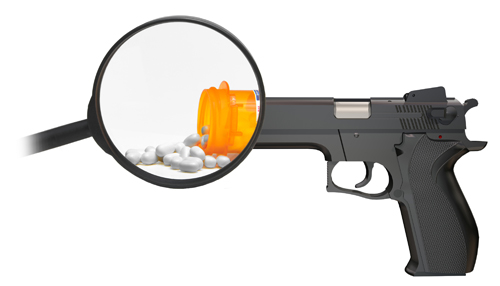
At least 37 acts of school-related acts of violence, including mass school shootings, have been committed by individuals taking or withdrawing from psychiatric drugs documented in 27 drug regulatory agency warnings to cause mania, psychosis, hostility, aggression and homicidal ideation.
Fact: At least 37 school shootings and/or school-related acts of violence have been committed by those taking or withdrawing from psychiatric drugs resulting in 175 wounded and 82 killed (in other school shootings, information about their drug use was never made public—neither confirming or refuting if they were under the influence of prescribed drugs). The most important fact about this list, is that these are only cases where the information about their psychiatric drug use was made public. (See full list below)
The below list includes individuals documented to have been under the influence of psychiatric drugs and not only includes mass shootings, but the use of knives, swords and bombs. 27 international drug regulatory agency warnings cite side effects including mania, violence, psychosis and even homicidal ideation.
- May 1, 2017 – Austin, Texas: Kendrex J. White, 21, stabbed four people with a machete-like hunting knife at the University of Texas, killing one and wounding three. The stabbings occurred within a one-block area as the attacker “calmly walked around the plaza,” according to the chief of police. After he was arrested, White told police he did not remember the attack. The police department said that White had recently been involuntarily committed in another city, and county records showed that he had been arrested and charged with a DWI (Driving While Intoxicated) on April 4, 2017. When an officer spoke to him, White said he had taken two “happy pills,” listed as the antidepressant Zoloft.[1]
- November 20, 2014 – Tallahassee, Florida: 31-year-old Myron May, a Florida State University alum, opened fire in the school’s library where hundreds of students were studying, wounding three before he ws shot and killed by police. According to May’s friends, after going to see a psychologist because of trouble concentrating, he had been prescribed the antidepressant Wellbutrin and the ADHD drug Vyvanse, a combination which can cause paranoia. He started acting strangely and hearing voices, convinced that he was being spied on. He then checked himself in to a mental health center called Mesilla Valley Hospital around September of 2014. Shortly after this, his friends discoverred a new pill bottle among his prescriptions, the antipsychotic Seroquel. In addition, ABC Action News found a half-filled prescription for the antianxiety drug Hydroxyzine in his apartment after the shooting.[2]
- June 5, 2014 – Seattle, Washington: 26-year-old Aaron Ybarra opened fire with a shotgun at Seattle Pacific University, killing one student and wounding two others. Ybarra planned to kill as many people as possible and then kill himself. In 2012, Ybarra reported that he had been prescribed the antidepressant Prozac and antipsychotic Risperdal. A report from his counselor in December of 2013 said that he was taking Prozac at the time and planned to continue to meet with his psychiatrist and therapist as needed. His lawyer said Ybarra had a long history of mental health issues for which he was taking Prozac at the time of the shooting.[3]
- April 25, 2014 – Milford, Connecticut: 16-year-old Chris Plaskon stabbed Maren Sanchez, also 16, to death in a stairwell at Jonathan Law High School after she turned down his prom invitation. According to classmates and a former close friend, Chris was taking drugs for ADHD.[4]
- October 21, 2013 – Starks, Nevada: 12-year-old Jose Reyes opened fire at Sparks Middle School, killing a teacher and wounding two classmates before committing suicide. The investigation revealed that he had been seeing a psychotherapist 3 days before the shooting and was prescribed an antidepressant. He had a generic form of the antidepressant Prozac (fluoxetine) in his system at the time of death, police said.[5]
- January 15, 2013 – Louis, Missouri: 34-year-old Sean Johnson walked onto the Stevens Institute of Business & Arts campus and shot the school’s financial aid director once in the chest, then shot himself in the torso. Johnson had been taking prescribed drugs for an undisclosed mental illness.[6]
- October 24, 2011 – Snohomish County, Washington: A 15-year-old girl went to Snohomish High School where police alleged that she stabbed a girl as many as 25 times just before the start of school, and then stabbed another girl who tried to help her injured friend. Prior to the attack the girl had been taking “medication” and seeing a psychiatrist. Court documents said the girl was being treated for depression. [7]
- September 21, 2011 – Myrtle Beach, South Carolina: 14-year-old Christian Helms had two pipe bombs in his backpack, when he shot and wounded Socastee High School’s “resource” (police) officer. However the officer was able to stop the student before he could do anything further. Evidence showed that he was planning an attack similar to the Columbine High School shooting and had even made a list of who he was going to kill. Helms had been taking drugs for attention deficit hyperactivity disorder and depression.[8]
- December 13, 2010 – Planoise, France: A 17-year-old youth held twenty pre-school children and their teacher hostage with two swords for hours at Charles Fourier preschool. The teen was reported to be on “medication for depression.” Eventually, all the children and the teacher were released safely.[9]
- February 5, 2010 – Huntsville, Alabama: 15-year-old Hammad Memon shot and killed another Discover Middle School student Todd Brown. Memon had a history of being treated for ADHD and depression. He was taking the antidepressant Zoloft and “other drugs for the conditions.” He had also been seeing a psychiatrist and psychologist.[10]
- September 23, 2008 – Kauhajoki, Finland: 22-year-old culinary student Matti Saari shot and killed 9 students and a teacher, and wounded another student, before killing himself. Saari was taking an SSRI and alprazolam (Xanax). He was also seeing a psychologist.[11]
- April 24, 2008 – Fresno, California: 17-year-old Jesus “Jesse” Carrizales attacked an officer at Fresno high school, hitting him in the head with a baseball bat. After knocking the officer down, the officer shot Carrizales in self-defense, killing him. Carrizales had been prescribed Lexapro and Geodon, and his autopsy showed that he had a high dose of the antidepressant Lexapro in his blood that could have caused him to be paranoid, according to the coroner.[12]
- February 14, 2008 – DeKalb, Illinois: 27-year-old Steven Kazmierczak shot and killed five people and wounded 21 others before killing himself in a Northern Illinois University auditorium. According to his girlfriend, he had recently been taking prescribed drugs Prozac, Xanax and Ambien but had stopped taking Prozac three weeks before the shooting. Toxicology results showed that he still had trace amount of Xanax in his system. He had been seeing a psychiatrist.[13]
- November 7, 2007 – Jokela, Finland: 18-year-old Finnish gunman Pekka-Eric Auvinen shot and killed eight people and wounded a dozen more at Jokela High School in southern Finland before committing suicide. He had been taking antidepressants.[14]
- November 7, 2007 – Tyler, Texas: 17-year-old Felicia McMillan returned to her former Robert E. Lee High School campus and stabbed a male student and wounded the principle with a knife. McMillan had been on drugs for depression, and had just taken them the night before the incident.[15]
- October 10, 2007 – Cleveland, Ohio: 14-year-old Asa Coon stormed through his school with a gun in each hand, shooting and wounding four before taking his own life. Coon had been prescribed the antidepressant Trazodone.[16]
- January 19, 2007 – Sudbury, Massachusetts: 16-year-old John Odgren stabbed another student to death with a large kitchen knife in a boy’s bathroom at Lincoln-Sudbury Regional High School. In court, his father testified that Odgren was prescribed the drug Ritalin.[17]
- December 4, 2006 – North Vernon, Indiana: 16-year-old Travis Roberson stabbed another Jennings County High School student in the neck, nearly severing an artery. Roberson was in withdrawal from Wellbutrin, which he had stopped taking days before the attack.[18]
- August 30, 2006 – Hillsborough, North Carolina: 19-year-old Alvaro Rafael Castillo shot and killed his father, then drove to Orange High School where he opened fire. Two students were injured in the shooting, which ended when school personnel tackled him. His mother said he was on drugs for depression.[19]
- April 24, 2006 – Chapel Hill, North Carolina: 17-year-old William Barrett Foster took a shotgun to school and took a teacher and a fellow student hostage at East Chapel Hill High School. After being talked out of shooting the hostages, Foster fired two shots through a classroom window before fleeing the school on foot. Foster’s father testified that his son had stopped taking his antidepressants and antipsychotic drugs without telling him.[20]
- November 8, 2005 – Jacksboro, Tennessee: Kenneth Bartley, 14, a student at Campbell County Comprehensive School, shot and killed the assistant principal and wounded another assistant principal and the principal. He was taking Xanax at the time of the shooting. Just before the shooting, Bartley had also snorted a crushed Valium pill.[21]
- March 21, 2005 – Red Lake, Minnesota: 16-year-old Jeff Weise, on Prozac, shot and killed his grandfather and his grandfather’s girlfriend, then went to his school on the Red Lake Indian Reservation where he shot dead 5 students, a security guard, and a teacher, and wounded 7 before killing himself.[22]
- February 9, 2004 – Greenbush, New York: 16-year-old Jon Romano strolled into his high school in east Greenbush and opened fire with a shotgun. Special education teacher Michael Bennett was hit in the leg. Romano had been taking the antianxiety drug Xanax. He had previously spent time in a psychiatric care facility.[23]
- June 8, 2001 – Ikeda, Japan: 37-year-old Mamoru Takuma, wielding a 6-inch knife, slipped into an elementary school and stabbed eight first- and second-grade students to death while wounding at least 15 other pupils and teachers. He then turned the knife on himself but suffered only superficial wounds. He later told interrogators that before the attack he had taken 10 times his normal dose of antidepressants. Police said he had been under the care of a psychiatrist.[24]
- April 10, 2001 – Wahluke, Washington: Sixteen-year-old Cory Baadsgaard took a rifle to his high school and held 23 classmates and a teacher hostage. Three weeks earlier, his doctor had switched Baadsgaard’s prescription from Paxil to Effexor. The morning of the incident, his dosage of Effexor had been increased. Baadsgaard said he had no memory of the incident.[25]
- March 22, 2001 – El Cajon, California: 18-year-old Jason Hoffman, on the antidepressants Celexa and Effexor, opened fire on his classmates, wounding three students and two teachers at Granite Hills High School. He had been seeing a psychiatrist before the shooting.[26]
- March 7, 2001 – Williamsport, Pennsylvania: 14-year-old Elizabeth Bush was taking the antidepressant Prozac when she shot at fellow students, wounding one.[27]
- February 2, 2001 – Red Lion, Pennsylvania: 56-year-old William Michael Stankewicz entered North Hopewell-Winterstown Elementary School with a machete, leaving three adults and 11 children injured. Stankewicz was taking four different drugs for depression and anxiety weeks before the attacks.[28]
- January 10, 2001 – Oxnard, California: 17-year-old Richard Lopez went to Hueneme High School with a gun and shot twice at a car in the school’s parking lot before taking a female student hostage. A SWAT officer eventually killed Lopez, who had been prescribed Prozac, Paxil and “drugs that helped him go to sleep.”[29]
- May 20, 1999 – Conyers, Georgia: 15-year-old T.J. Solomon was being treated with the stimulant Ritalin when he opened fire on and wounded six of his classmates.[30]
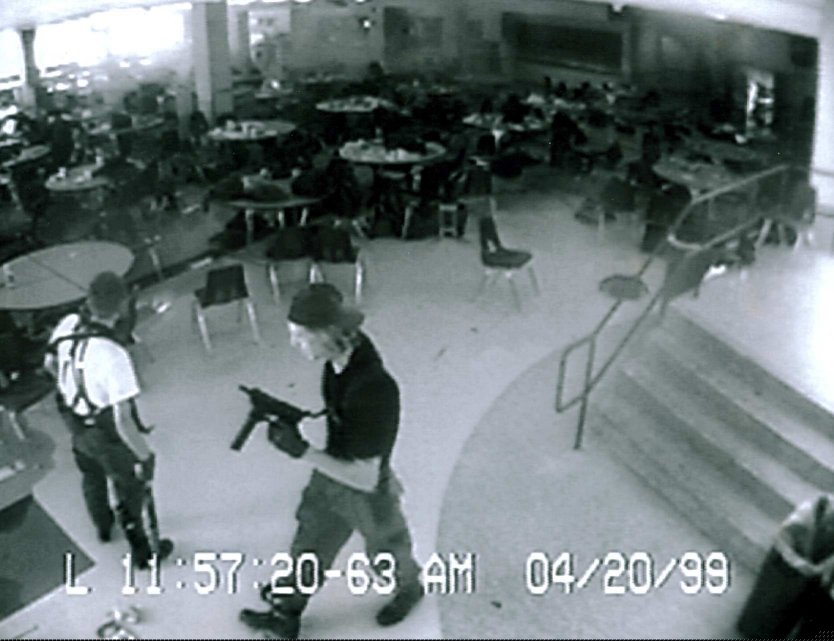
- April 20, 1999 – Columbine, Colorado: 18-year-old Eric Harris and his accomplice, Dylan Klebold, killed 12 students and a teacher and wounded 26 others before killing themselves. Harris was on the antidepressant Luvox. Klebold’s medical records remain sealed. Both shooters had been in anger-management classes and had undergone counseling. Harris had been seeing a psychiatrist before the shooting.[31]
- April 16, 1999 – Notus, Idaho: 15-year-old Shawn Cooper fired two shotgun rounds in his school, injuring one student. He was taking a prescribed antidepressant and Ritalin.[32]
- May 21, 1998 – Springfield, Oregon: 15-year-old Kip Kinkel murdered his parents and then proceeded to school where he opened fire on students in the cafeteria, killing two and wounding 25. Kinkel had been taking the antidepressant Prozac. Kinkel had been attending “anger control classes” and had previously been under the care of a psychologist.[33]
- October 1, 1997 – Pearl, Mississippi: Luke Woodham, 16, shot and killed two students at Pearl High School and wounded seven others after beating and stabbing his mother to death. Public reports said the boy was taking Prozac. In June 1998, Woodham was found guilty of two counts of murder and seven counts of aggravated assault and was sentenced to two consecutive life sentences for the murder convictions and seven 20-year sentences for the aggravated assault convictions.[34]
- October 12, 1995 – Blackville, South Carolina: 15-year-old Toby R. Sincino slipped into the Blackville-Hilda High School’s rear entrance, where he shot two Blackville-Hilda High School teachers, killing one. Then Toby killed himself moments later. His aunt, Carolyn McCreary, said he had been undergoing counseling with the Department of Mental Health and was taking Zoloft for emotional problems.[35]
- December 16, 1993 – Chelsea, Michigan: 39-year-old chemistry teacher Stephen Leith, facing a disciplinary matter at Chelsea High School, shot Superintendent Joseph Piasecki to death, shot Principal Ron Mead in the leg, and slightly wounded journalism teacher Phil Jones. Leith was taking Prozac and had been seeing a psychiatrist.[36]
- September 18, 1992 – Houston, Texas: 44-year-old Calvin Charles Bell, reportedly upset about his second-grader’s progress report, appeared in the principal’s office of Piney Point Elementary School. Bell fired a gun in the school, and eventually wounded two officers before surrendering. Relatives told police that Bell was an unemployed Vietnam veteran and had been taking anti-depressants.[37]


![Ira Einhorn at the April 1970 Earth Day celebration in Philadelphia [AP Photo/Temple University]](https://investigationdiscovery.sndimg.com/content/dam/images/investigationdiscovery/crimefeed/legacy/2019/04/AP-Ira-Einhorn-7004010224.jpg.rend.hgtvcom.616.462.suffix/1555692558302.jpeg "IRA EINHORN")
![Holly Maddux [Getty Images]](https://investigationdiscovery.sndimg.com/content/dam/images/investigationdiscovery/crimefeed/legacy/2019/04/Getty-Holly-Maddux-1479906.jpg.rend.hgtvcom.616.822.suffix/1555692592342.jpeg "Holly Maddux [Getty Images]")